
DESIGNING MODERNISM
at the bursting seam between joo chiat and geylang serai, reimagining what a living cultural space dedicated to the contemporary singaporean condition looks like: an ongoing proposition for how we inherit and build on the aesthetics of modern life in singapore
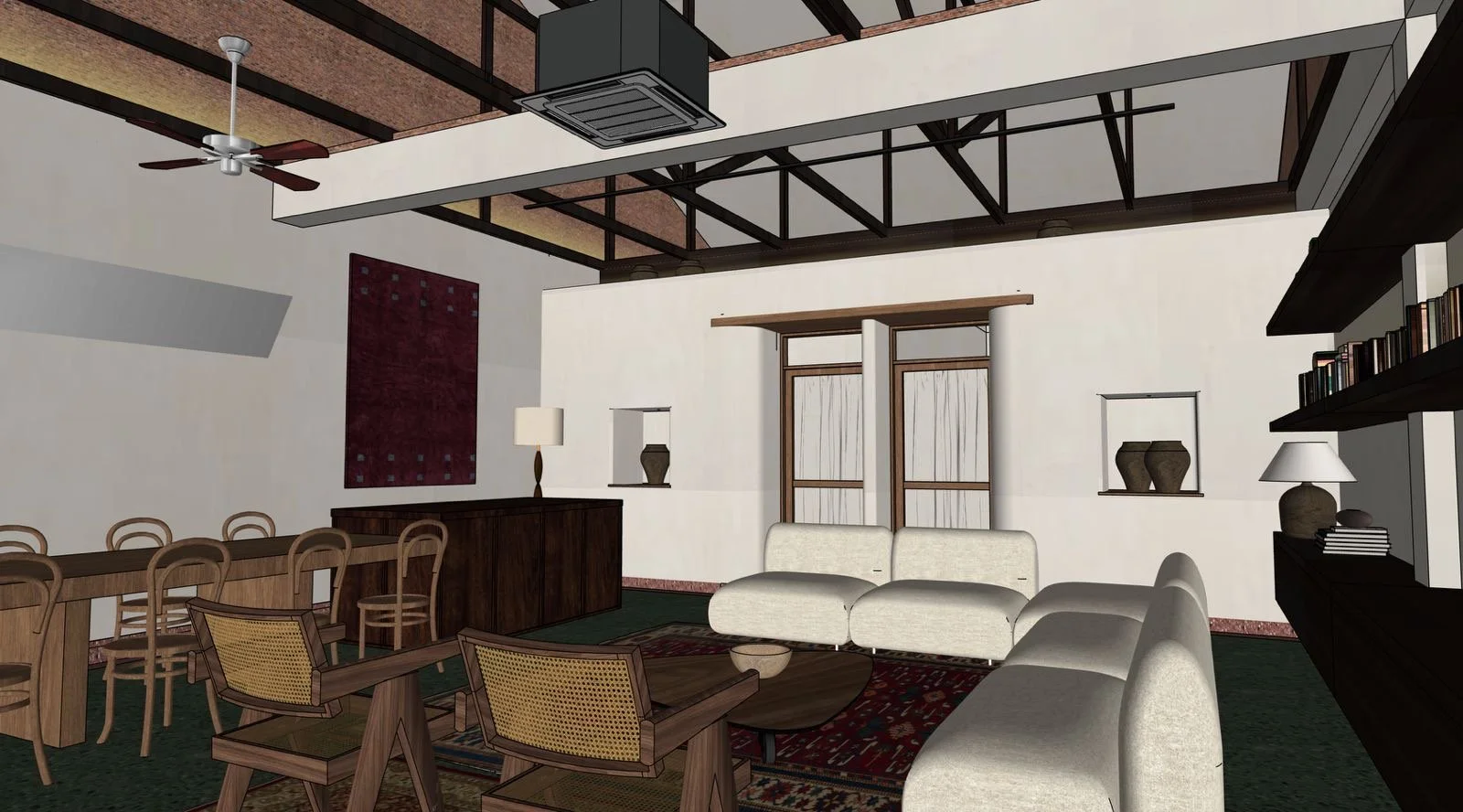
how do spaces remember?
52cc took nine full months to realise, from conception to delivery.
the starting point for designing this cultural space was, unsurprisingly, restoration. built in the 1950s, this malayan modernist loft sat beneath seven decades of modern alterations. it was nevertheless a stupendous structure, with an expansive architectural generosity so rarely seen in singapore today: soaring pitched roof, angled brises soleils, and streamlined ventilation slats, all designed specifically to respond to our equatorial climate.
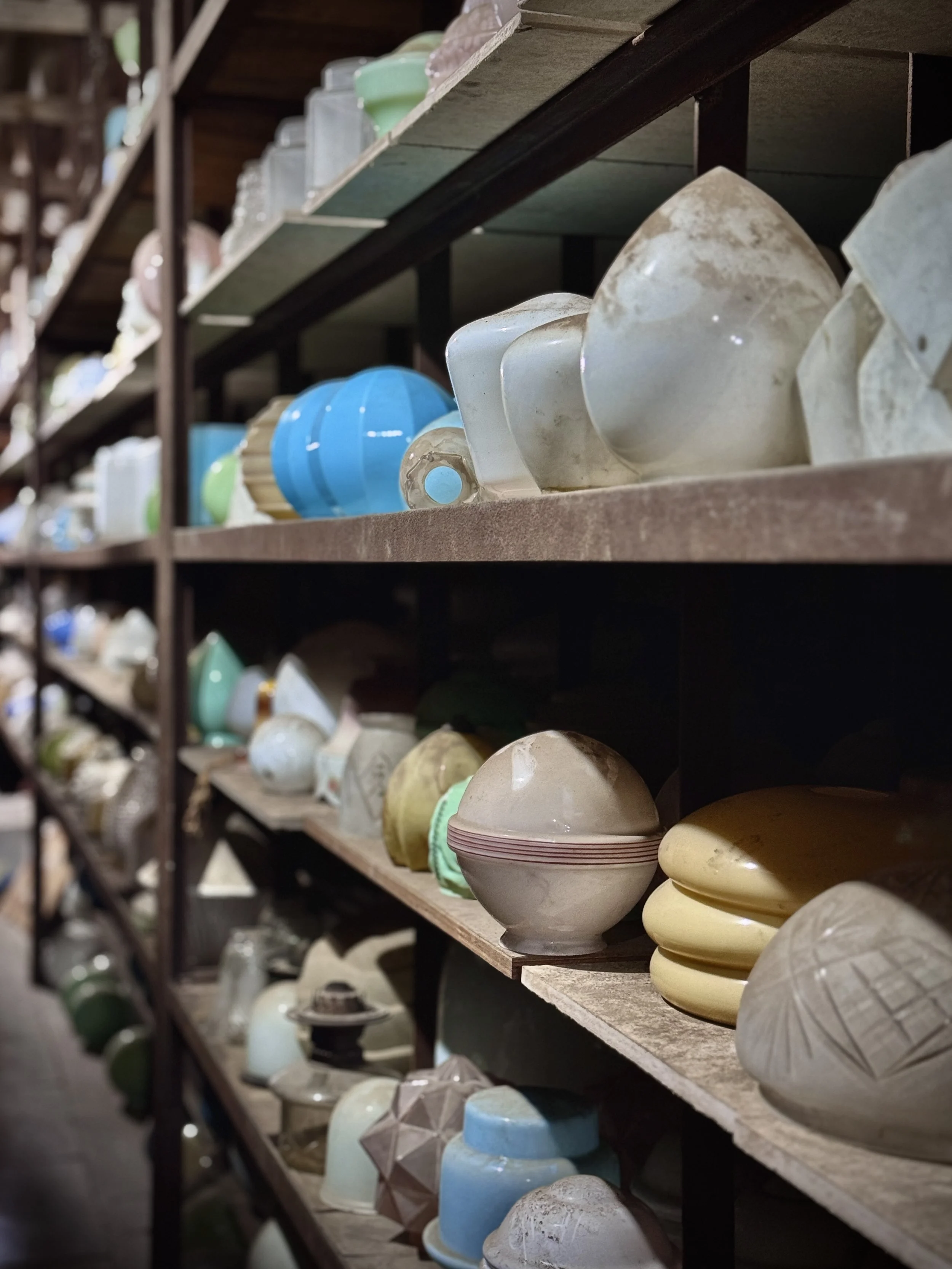
risking life and lung for the perfect midcentury lampshade
over time, many of these classic tropical modernist elements had either been obscured or allowed to deteriorate. we removed the low, brooding, asbestos-filled false ceiling to reveal and repair the original timber roof structure, and reinstated the windows in their original proportions of thin steel ribs and thick textured glass. little architectural details that had come undone over seventy years of use were carefully reintroduced: in shanghai, we tracked down original brass doorknobs salvaged from an early modernist residence in the french concession; in bombay, we poked our way around dusty warehouses to find the exact kind of midcentury opaline glass lamp that would have illuminated the little kitchen space.
(if we had our way there’d frankly be more: we’d been on track to craft oversized handles for the main door out of 70 year old weathered wooden logs, found on the roof when repairing the old terracotta shingles; the labourers, none the wiser, very helpfully then tossed them out together with the sacks of hacked cement rubble.)
only once these bones were properly restored did we begin to layer onto the space — a contemporary response to the flat’s original malayan modernist logic. we knew we didn’t want to create a dogmatic period piece, or a museum to midcentury modern design, or a generic international aesthetic that could just as easily belong anywhere else (god forbid, a space stocked to the rafters with scandinavian furniture). and so our design north star became more a speculative one: how might this very singaporean space look today if it were designed, lived in, and continually layered onto by the same singaporean aesthete who’d originally built this flat more than half a century ago?
regional modernist lineages
once we centred that interrogation as our design paradigm, the whole process immediately became less about mirroring stylistic references, and more about understanding how spaces have been shaped by attitudes towards living, hosting, gathering, and making. singapore in the 1950s, after all, was far from a quiet or inward-looking society: it was a heady whirlwind of extraordinary flux, marked by new global access and cultural experimentation and self-fashioning. for broad swathes of our population, architecture and domestic space, more than ever before, became sites of answering a fundamental question about ourselves: who are we becoming, and how do we want to live?
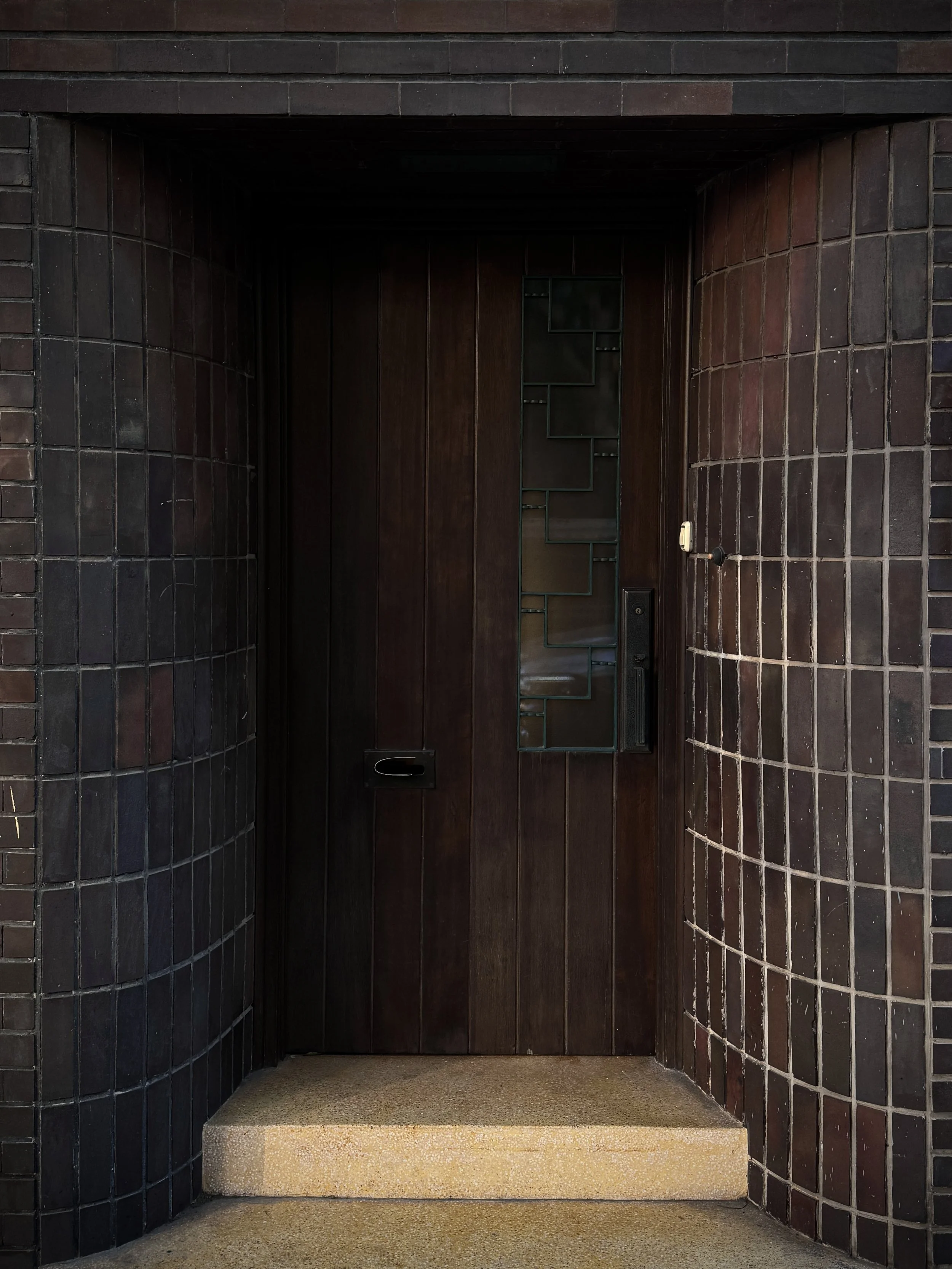
entryway inspiration in the heart of art deco shanghai
that question, of course, continues to be no less relevant to the singaporean identity today.
and so we set about designing a space squarely and stubbornly rooted in the rich traditions of asian modernism; ones that we find right in our backyards, but that far too often are overlooked in favour of more familiar western narratives. the green and maroon terrazzo floors are produced by bharat flooring & tiles — a 120 year old purveyor whose work runs through some of the most significant art deco and midcentury interiors across india. curved doorways introduce a sweeping deco geometry: the kind that makes early port cities in asia — singapore, shanghai, bombay, penang — such charming urban landscapes. in the small bathroom, a mirrored window grid both illuminates the space and preserves sightlines to the spiral staircase beyond, a technique deployed by influential tropical modernists like geoffrey bawa to allow both functional and spatial continuity.
early in the restoration, we also discovered the original painted walls: a two-toned composition in salmon and teal, unmistakably midcentury in palette. it was beautiful, but also altogether too overwhelming for contemporary sensibilities. instead we preserved it on a single beam, a reminder that the flat’s design neither began - nor shall end — with us. the remaining walls, refinished in earthy microcement, were applied to echo the original two-toned placement.
an old interior designed to age
midcentury details
it wouldn’t have been a nine-month process were it a straightforward restoration and renovation. like most structures built in the 1950s, everything in it is a little lopsided: walls warp, beams slant, ceiling joists slope. the floors turned out to be a full 14cm higher at one spot than another. some of this wonkiness was scrupulously corrected — 150 bags of cement to level out the flooring, for instance — but the majority of these quirks have been left intact to celebrate this flat’s curious spirit.
at its core, 52cc has been designed as a sensitive adaptation that would allow this malayan modernist flat to continue evolving with use — just as this fascinating neighbourhood is continually shaped by the ways its unique residents gather, trade, and live everyday life here. it is built to function both as a home studio and as a cultural platform; a salon where meals and conversation unfurl into each other; where art and design are encountered in a living, domestic setting rather than an institutional one. in this way, its hospitality and programming aren’t conceived of as overlays on the midcentury space, but as part of the same continuum of cultural thought and creative practice. its design is infrastructural: 52cc is specifically built to be used, patinated, rearranged, and reinterpreted, in the same spirit that has animated this site for seventy rich years.
52cc, then, is an assertion that contemporary singaporean design is neither a singular aesthetic, nor an exercise in reinvented nostalgia. rather, it is grounded in deep scholarship of our cultural context, in the thoughtful curation of global influences, and in a willingness to build forward without severing what already exists.
it is, in other words, an invitation to reconsider who we are becoming, and how we want to live.
